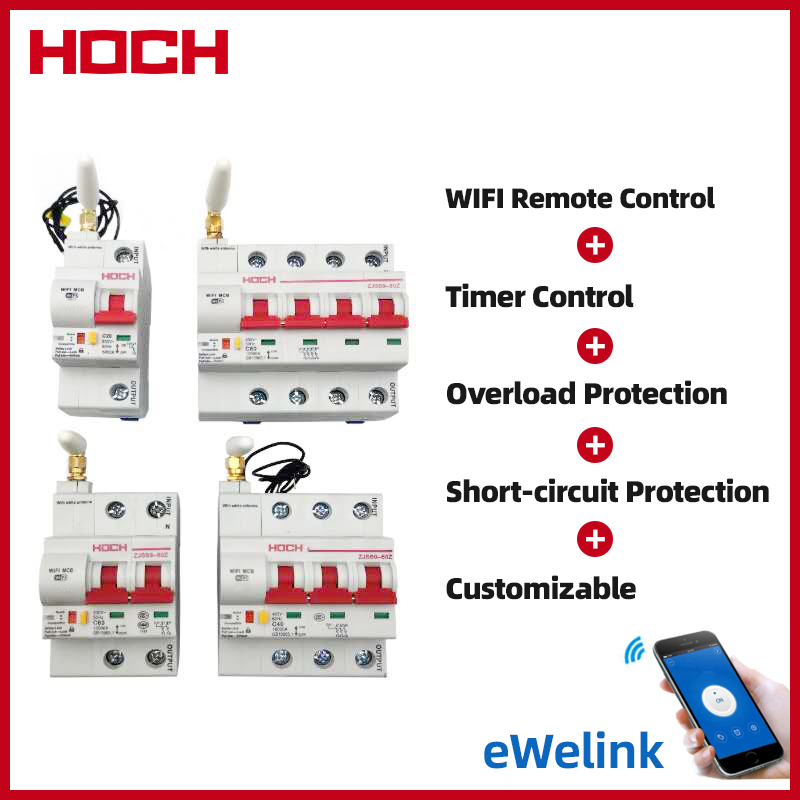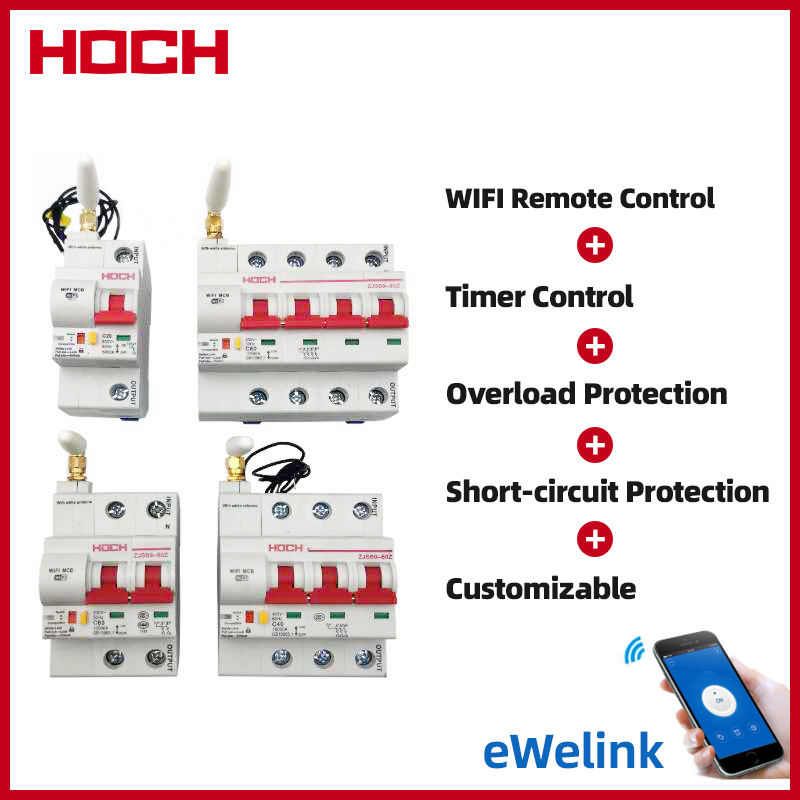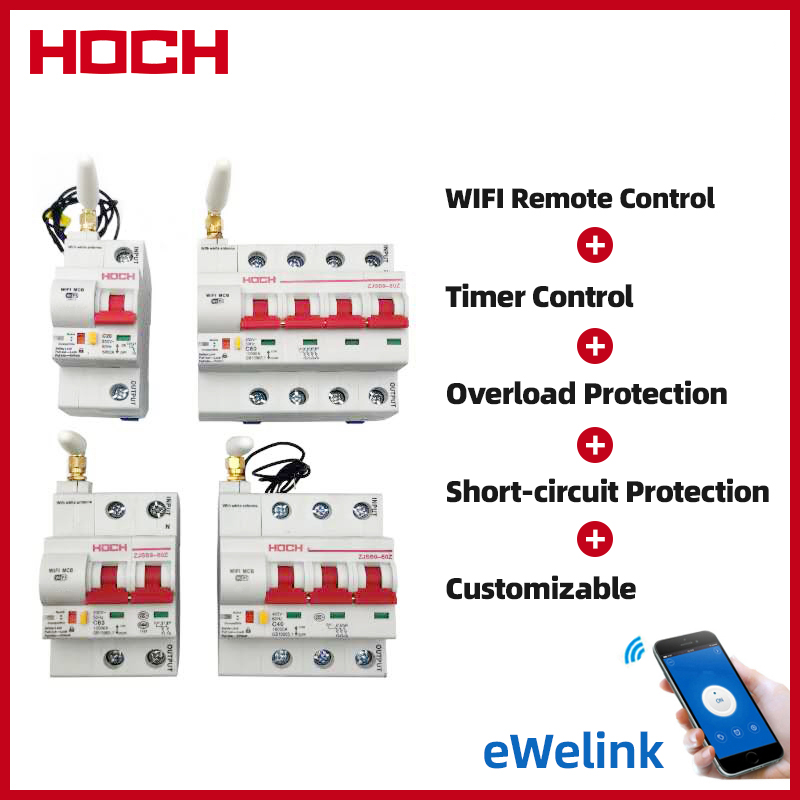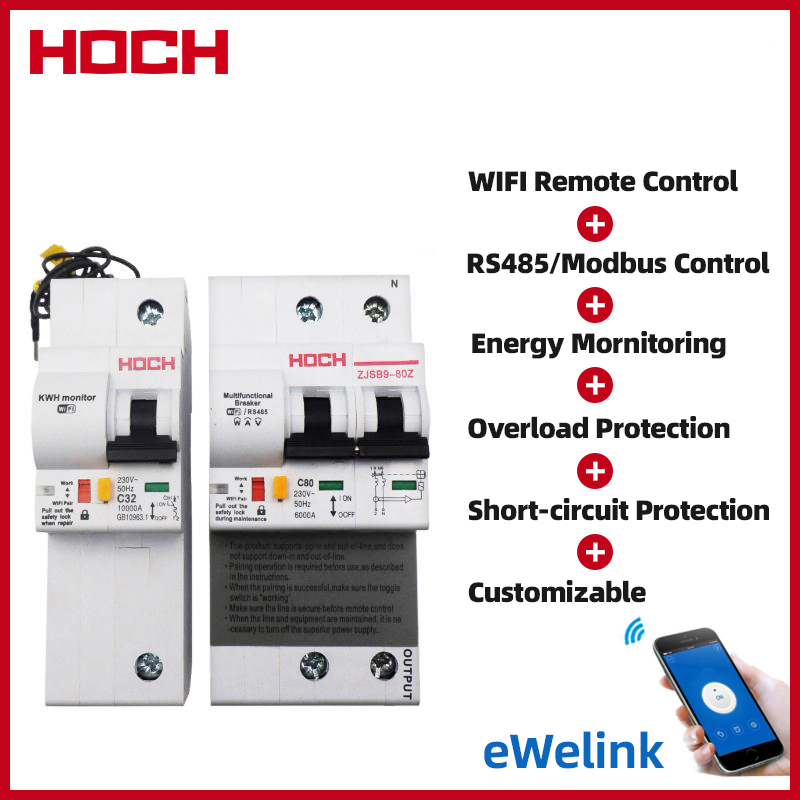

As we all know, mini circuit breakers are widely used in our home power system because of their small size, convenient installation and flexible use.
It mainly has a short circuit protection (electromagnetic trip) and overload protection (bimetallic hot trip).
Our common leakage protector is a small leakage breaker with leakage tripping accessories.
Protection principle
Short circuit protection: when the short circuit fault occurs, the short circuit current is very large, and the electromagnetic force of the electromagnetic coil is used to drive the iron core inside the coil to push the push rod, and the push rod top unlocks the buckle to realize the breaking function time less than or equal to 0.1 seconds.
Overload protection: when the circuit overload fault occurs when the current exceeds the rated current and is less than the set short-circuit current value, the overload current makes the thermal bimetallic element bend and push the lock, so as to achieve the function of breaking the circuit breaker. The time has the corresponding delay according to the size of the current.
The difference between type C and type D
I don’t know if you usually notice: there is a C or D under the small circuit breaker model!
Do you understand what this means? What’s the difference between them?
Now let’s tell you the difference between Type C and Type D. The difference between Type C and Type D lies in the difference of the short-circuit instantaneous tripping current, but their overload protection function is the same.
Type C: magnetic trip current is (5-10) In, that is, when the current is 10 times the rated current trip, the action time is less than or equal to 0.1 seconds. Suitable for protecting conventional loads and lighting circuits. (Home use is more C type)
Type D: magnetic trip current is (10-20) In, that is, when the current is 20 times the rated current trip, the action time is less than or equal to 0.1 seconds. Suitable for protecting equipment with high impulse current, starting current load, such as direct start of small motors, generally our home is rarely useful to D type, most will be used to protect transformers, solenoid valves and so on.