E-mail:sales@hoch.com.cn

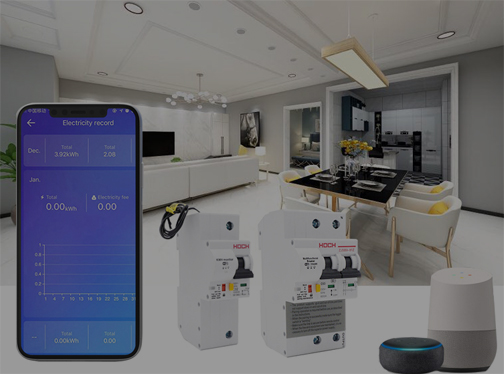
Miniature circuit breaker (MCB) . Because electrical systems often face challenges, such as overloads and short circuits, which can lead to equipment damage, fires, and even electrocution. These issues can be caused by faulty wiring, overloaded circuits, or the use of inappropriate electrical devices, highlighting the need for effective protection mechanisms, when electrical systems experience overloads or short circuits, sensitive equipment, such as computers, appliances, and machinery, can suffer severe damage, leading to costly repairs or replacements.
It mainly applied to architecture fields, industries and civilian household, and functionas isolating,overload and short-circuit protection,it protect for infrequent making and breaking electrical apparatus.
Miniature circuit breaker (MCB) ensure electrical safety in homes offices and other buildings as well as for industrial applications by protecting electrical installations against overloads and short circuits.
Risk of Fire
Unprotected electrical systems can cause excessive heat buildup, leading to fires that can result in significant property damage and even loss of life.
Electrical Shock Hazards
Electrical faults can create hazardous conditions for individuals, leading to the risk of electrocution or severe electrical burns.
Miniature circuit breaker refers to a protective electrical device installed on terminal distribution lines, mainly used for overload and short circuit protection of lines and electrical equipment.
It mainly applied to architecture fields, industries and civilian household, and functionas isolating,overload and short-circuit protection,it protect for infrequent making and breaking electrical apparatus.
The working principle of MCB (miniature circuit breaker) mainly involves automatically cutting off the circuit to protect it from damage or personal injury.
As an automatic switch, the main function of MCB is to open the circuit when there is excessive current or a short circuit, thereby interrupting the flow of current. This function is achieved through an internal release, which can quickly operate when overload or short circuit conditions are detected, driving the moving contact back to the open position, thereby cutting off the circuit. This automatic cut-off function enables MCB to effectively protect circuits and equipment from damage, while also ensuring personal safety.

Miniature circuit breakers can be classified into types B, C, D, etc. based on their trip characteristics and application scenarios:
1. B-type circuit breaker:
The tripping characteristic of B-type circuit breakers is 2 to 3 times the rated current, and they are usually used for pure resistive loads and low-voltage lighting circuits. This type of circuit breaker is suitable for residential distribution boxes to protect household appliances and personal safety, but it is currently used less frequently.
2. C-type circuit breaker:
The tripping characteristic of a C-type circuit breaker is 5 to 10 times the rated current, and it needs to trip within 0.1 seconds. C-type circuit breaker is the most commonly used type, suitable for protecting distribution lines and lighting lines with high connection currents.
3. D-type circuit breaker:
The tripping characteristic of D-type circuit breakers is 10 to 20 times the rated current, mainly used in environments with high instantaneous currents, such as high starting currents generated during motor start-up. This type of circuit breaker is suitable for systems with high inductance loads and large surge currents, and is commonly used to protect equipment with high surge currents.
In addition to the common A, B, C, and D type circuit breakers mentioned above, there are other special types of miniature circuit breakers, such as K-type, which are mainly used for commercial or special industrial applications with large changes in surge current.
When choosing a miniature circuit breaker, it is necessary to determine the appropriate type based on the specific requirements and load characteristics of the circuit. For example, for ordinary household circuits, C-type circuit breakers may be the most common choice; For power circuits such as electric motors, it may be necessary to choose D-type circuit breakers. In addition, miniature circuit breakers can be divided into alternating current (AC) and direct current (DC), with DC miniature circuit breakers facing greater challenges when disconnecting DC current because they do not have a natural zero crossing point for AC current to help extinguish the arc.
The product has a wide range of applications.
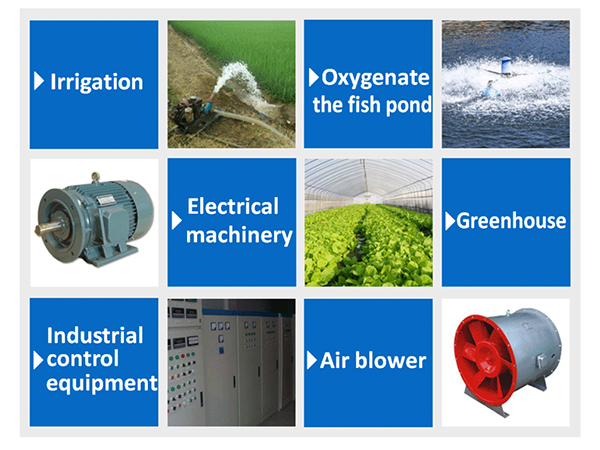
Widely applicable fields:
MCB, as a type of miniature circuit breaker, is widely used in building electrical terminal distribution equipment, mainly to protect single-phase and three-phase circuits from damage caused by short circuits, overloads, and overvoltages. Its small size, light weight, and reliable operation make it an ideal choice for residential, commercial, and industrial facilities.
Comprehensive protection:
MCB achieves short-circuit and overload protection by monitoring current. When a short-circuit fault occurs in the circuit, MCB will immediately cut off the circuit to prevent safety accidents such as fire. When an overload occurs, the MCB will delay disconnecting the circuit for a certain period of time to protect the electrical equipment from damage. In addition, MCB also has overvoltage protection function, which can cut off the circuit in case of abnormal voltage, avoiding damage to electrical equipment.
Easy to restore power and reduce maintenance costs:
Compared to fuses, miniature circuit breakers have higher sensitivity and can quickly work under overload and undervoltage, reducing maintenance costs. At the same time, its easy to restore power characteristics also improve the availability of the power system.
Improving safety and reliability:
By monitoring changes in current, MCB can promptly detect and solve potential electrical problems, thereby enhancing the safety and reliability of the entire power system. This is crucial for ensuring personnel safety and equipment integrity.
Adapting to rapid volume acquisition and efficient conversion:
In the field of digital marketing, MCB (Maximum Conversion) as an advertising strategy can achieve rapid volume acquisition and efficient conversion. It has clear consumption and effect expectations, can prioritize spending the set budget, and can view the estimated conversion cost corresponding to the set budget in the “Effect Estimation”. In addition, the MCB strategy also has the characteristics of strong volume running ability and fast start-up, which is suitable for advertising scenarios that require rapid volume acquisition.
In summary, MCB has demonstrated its unique advantages and application value in both the field of electrical protection and digital marketing.